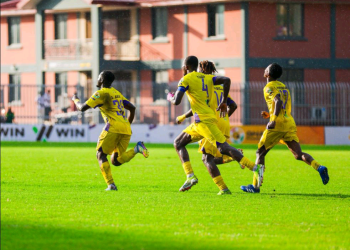

















As private investment continues to reshape Ghana’s football landscape, a new debate is emerging within the local game: Should two football clubs owned or controlled by the same individual be allowed to compete in the same MTN FA Cup?
This discussion has erupted again after the MTN FA Cup draw which brought together Medeama SC and Rospak SC. There seem to be some relationship between these two clubs. One can treat Rospak SC as effectively a development / feeder arm of Medeama SC — meaning they are closely linked, players move between them, and Rospak helps serve Medeama’s talent pipeline. This discussion is not narrowed to these clubs per se but rather the football fraternity at large.
The question, once distant, is gradually becoming relevant as more entrepreneurs, academies, and football agencies acquire interests in multiple clubs across the Ghana Premier League, Division One, and lower divisions. With the FA Cup bringing teams from all tiers together in a knockout format, the possibility of two “sister clubs” meeting is no longer far-fetched—and football stakeholders are paying attention.
Integrity Under the Spotlight
Concerns largely centre on integrity. Ghana football is still working to rebuild public trust following years of negative headlines—from the Anas “Number 12” exposé to allegations of match manipulation in the lower leagues. Many observers fear that allowing two clubs under one owner or related cubs to play in the same competition could reopen old wounds.
Even if no wrongdoing occurs, critics argue that the perception alone is damaging.
How can fans be confident that a fair contest is taking place when one person controls the destiny of both teams? Football is about trust. The slightest doubt spoils everything.
A Knockout Format with High Stakes
Unlike the league, where teams rarely meet outside their division, the MTN FA Cup pitches clubs from all levels against one another. A Premier League side can easily draw a Division One or Division Two outfit in the early rounds.
In a landscape where many club owners sponsor smaller teams as feeder sides, the risk of a crossover fixture cannot be ignored.
In such a matchup:
- Tactical information could be shared
- Players may feel conflicted
- Owners may be tempted to influence outcomes
- Fans may suspect a “soft” match
Sponsors and broadcasters, who rely heavily on the competition’s unpredictability, would certainly not be pleased with such controversies.
A Look at Ghana’s Regulatory Gap
The Ghana Football Association (GFA) Statutes address conflicts of interest generally, but there is currently no specific rule prohibiting teams with shared ownership from taking part in the same domestic competition.
The FA Cup regulations also do not clearly define:
- What constitutes “ownership”
- How much influence counts as control
- Whether feeder clubs can enter the same tournament as their parent club
This void leaves administrators with a potential governance headache if the issue arises.
Lessons from Abroad
European football offers clear guidance. UEFA’s rules forbid two clubs owned by the same entity from competing in the same Champions League or Europa League. Their reasoning is simple: competition integrity must come first.
England’s FA has similar mechanisms to prevent conflicts, even though multi-club ownership there is less common domestically.
With global investment groups such as Red Bull and City Football Group expanding into Africa, many analysts believe Ghana must act before the problem becomes widespread.
The Argument for Investment
Supporters of multi-club ownership maintain that banning such teams from the FA Cup may discourage investment in lower-tier clubs. Many investors use Division Two and Division Three sides as talent pipelines to support their Premier League ambitions.
They argue that:
- More clubs get funding
- Young players receive better development pathways
- Football infrastructure improves
But critics respond that integrity cannot be traded for investment.
Calls for Regulatory Reform
There is growing pressure on the GFA to follow international best practice by introducing rules that:
- Bar commonly-owned clubs from entering the same knockout competition
- Define ownership thresholds clearly
- Mandate full annual disclosure of club owners and financiers
- Impose sanctions for breaches
Stakeholders insist such measures are necessary to protect the reputation of the FA Cup and ensure fair competition.
Conclusion: Integrity Must Come First
As Ghana football strives to strengthen its credibility and attract sponsorship, the question of multi-club ownership cannot be left unanswered. While investors may promote the growth of local football, the possibility of two commonly owned clubs meeting in a high-stakes FA Cup match poses risks that Ghana’s football governance system may not yet be ready to manage.
Ultimately, the consensus among many experts is clear: For the sake of competitive integrity, Ghana must not allow two clubs with the same owner or clubs in a controlled relations to compete in the same FA Cup—at least not without strong regulations in place.
By Owuraku Nsiah, Chartered Accountant (CA) & Chartered Tax Practitioner (CTP), Sports Journalist (Sikka FM 89.5)